RiskLot Financial Multitool
Our Main Tools:
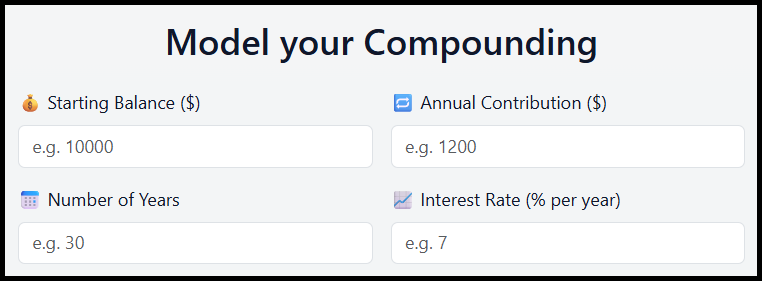
Compounding Chart Maker
Visualize how your portfolio grows over time and harness the true power of compounding.
 Open Calculator →
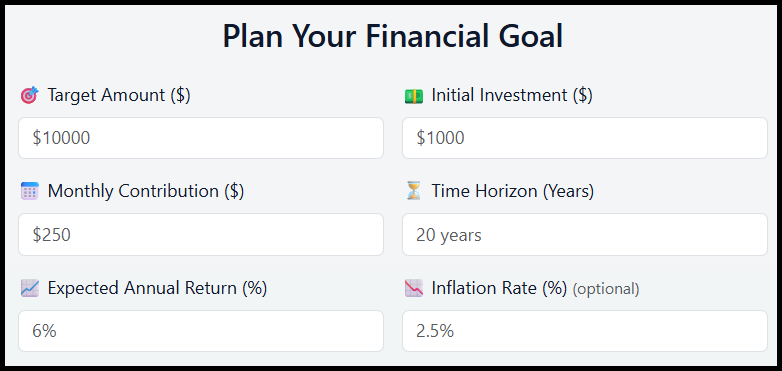
Savings Goal Calculator
Find out exactly how long it takes to reach your financial goals with consistent saving.
 Open Calculator →
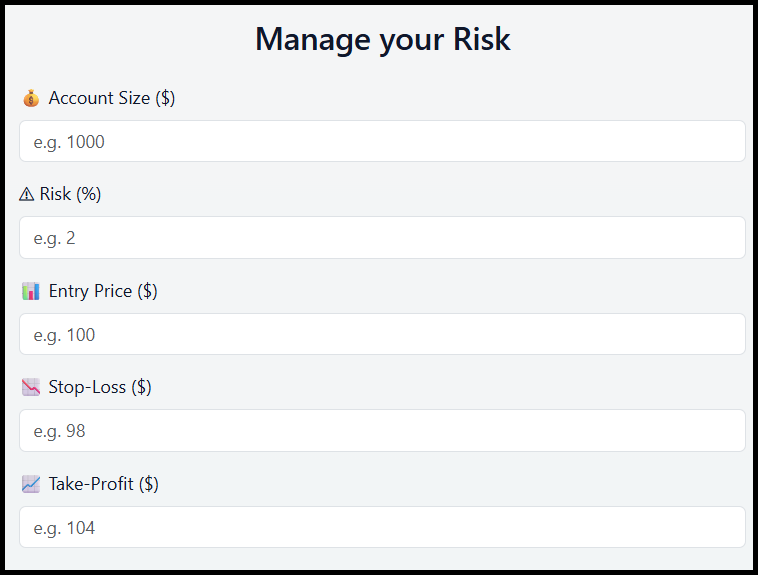
Position Size Calculator
Calculate the exact trade size to protect your capital and manage risk like a professional.
 Open Calculator →
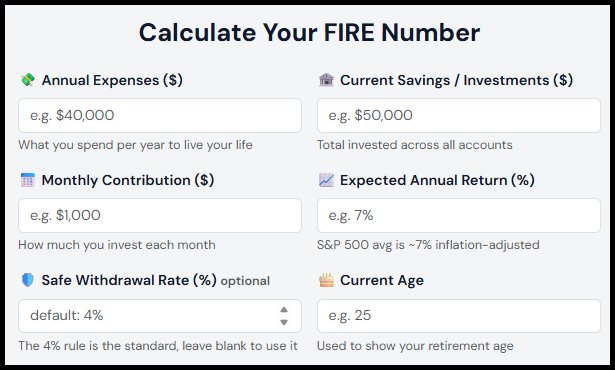
🔥 FIRE Calculator
Find your Financial Independence number and see exactly how many years until you can retire early.
 Calculate FIRE →
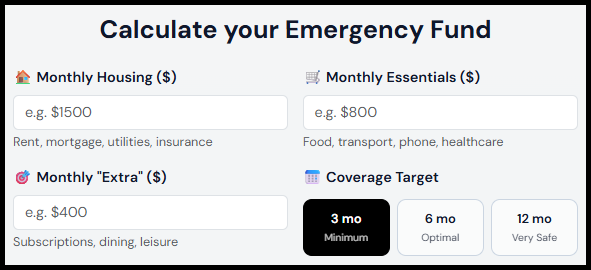
Emergency Fund Calculator
Calculate your Emergency Fund and stay on top of your finances.
 Open Calculator →
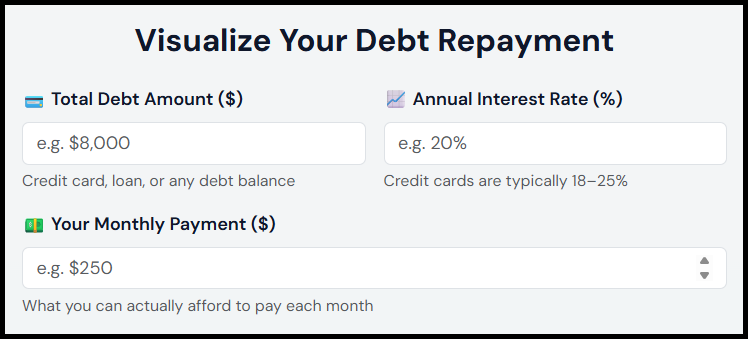
Debt Repayment Visualizer
See exactly when you'll be debt-free and how much you're really paying in interest vs just the minimum.
 Open Visualizer →
Blog
Insights on long-term investing, trading strategies, and broker recommendations.
 Read Posts →

About the Creator
Hey, my name is Martin and I am the founder of RiskLot.
I started investing at 16, buying gold and Bitcoin, and the long game is still my style. I'm a long-term investor and a Bitcoin holder through every cycle, with real estate as the newest addition to the mix. I'm 21, based in Czechia, studying economics, and genuinely interested with how capital markets work.
RiskLot started from a simple problem: most free financial calculators online are cluttered with ads, vague math, or paywalls. The idea for the first tool actually came together on a random late night a few months back while calculating my expected dividends. One calculator turned into six. I wanted something fast, transparent, and built on logic anyone can verify.
Every tool here, from the Position Size Calculator to the Debt Repayment Visualizer, is built with the same goal: give you a straight answer to "what does the math actually say and what it means for your finances."
Support the Project
If RiskLot saved you some time or money, a sat or two is always appreciated ₿
₿ Bitcoin Address
3P6gVGpPvp331AQ7o5ys3H4etZVpQ4cK9o
Frequent Questions
📐 What is position sizing?
Position sizing is deciding how many units, shares, or lots to buy on a single trade so that if it hits your stop-loss, you only lose a fixed percentage of your account (usually 1–2%).
It keeps one bad trade from doing serious damage.
📈 What is compound interest?
Compound interest means you earn returns not just on your starting balance, but also on the gains you've already made.
Over years, this snowball effect can turn modest monthly contributions into significant wealth.
🎯 What risk percentage should I use?
Most professional traders risk 0.5%–2% per trade. At 1% risk, you'd need to lose 100 trades in a row to blow up your account, which gives compounding the time it needs to work.
💰 What's a good annual return to expect?
The S&P 500 has historically returned around 7–10% per year on average. 5–8% annually is a realistic, conservative benchmark for long-term savings planning.
⏳ How long does it take to reach a savings goal?
It depends on your starting balance, monthly contribution, and expected return. Use the Savings Goal Calculator above to find out exactly.
🏠 What is an emergency fund?
An emergency fund is a dedicated cash reserve set aside to cover unexpected expenses: job loss, medical bills, car repairs, or anything else life throws at you. Most financial advisors recommend keeping 3–6 months of essential expenses in an easily accessible account like a high-yield savings account, separate from your investments.
💳 What is the minimum payment trap?
Credit card companies set minimum payments deliberately low, usually 1–3% of your balance. This keeps you paying interest for years while barely touching the actual debt. On an $8,000 debt at 20% interest, minimum payments alone can take over 10 years and cost more in interest than the original balance. Paying a fixed amount above the minimum can cut that to 3–4 years and save thousands.
📉 Should I pay off debt or invest first?
For high-interest debt above 7–8%, pay the debt first. A 20% credit card rate is a guaranteed 20% return on every dollar you throw at it, no index fund can reliably beat that. Once your expensive debt is cleared, redirect that monthly payment straight into investments and let compounding work for you instead of against you.
🔥 How much money do I need to retire early and never work again?
The answer comes from the 25x rule, multiply your annual expenses by 25 and that's your FIRE number. Spending $40,000 a year? You need $1,000,000 invested. At that point, a 4% annual withdrawal covers your expenses while your portfolio keeps growing. Use our FIRE Calculator to find your exact number in seconds.
₿ Should I invest in Bitcoin or index funds for long-term wealth?
Most financial advisors recommend index funds as the foundation: low fees, broad diversification, and a historical average of 7–10% annually. Bitcoin can play a role as a high-risk, high-reward allocation, but its volatility makes it unsuitable as your only long-term vehicle. A common approach is 80–90% index funds with a small Bitcoin position you're genuinely comfortable losing. Never put money into either that you can't afford to leave untouched for years.